Eyebrow Transplant
Over-plucked, scarred or naturally sparse brows — single grafts placed at the acute angle brow hair grows.
Artistry
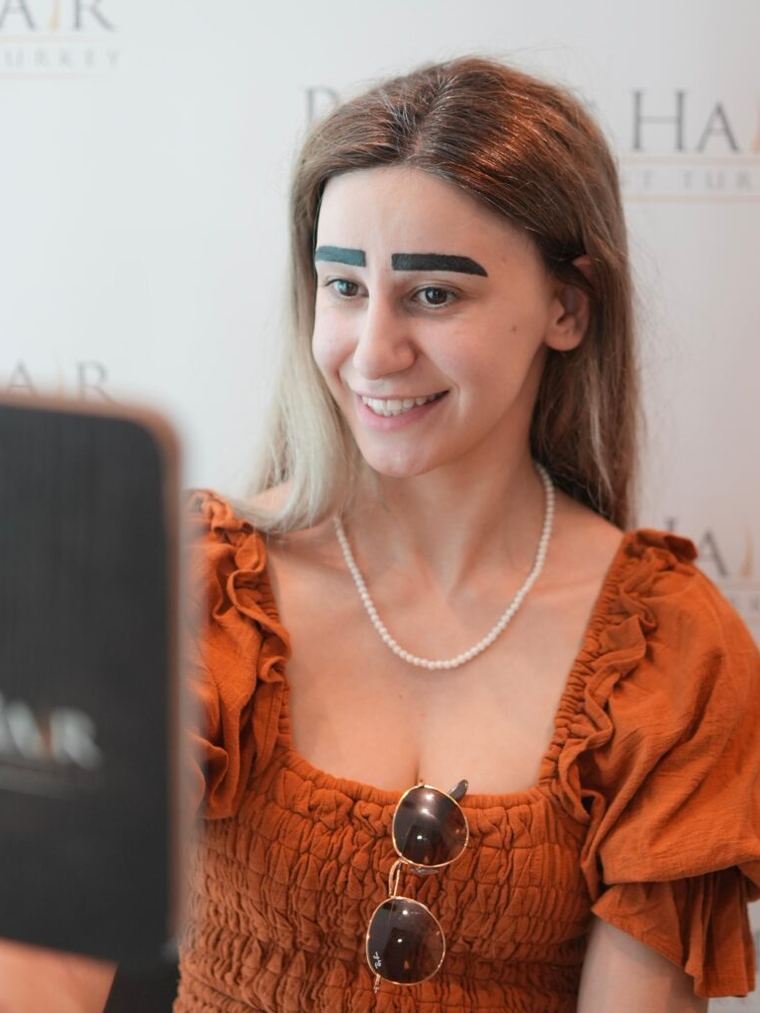
Over-plucked, scarred or naturally sparse brows — single grafts placed at the acute angle brow hair grows.
An eyebrow holds only a few hundred hairs, and every one of them is visible. There is nowhere to hide a graft placed at the wrong angle, which is why this is the most demanding procedure we perform per graft.
Brow hair grows almost flat against the skin and changes direction along its length — upward at the inner edge, outward across the arch, downward at the tail. Each graft is placed to follow that pattern, one hair at a time.
The brow is drawn and agreed with you before anything begins, checked against your features and with your face relaxed.
Only single-hair units are used, chosen from the finest available donor hair.
Sites are opened at a very shallow angle, following the natural flow of each section of the brow.
Placement is slow by necessity — a few hundred grafts can take several hours.
Tiny crusts along the brow, settling within a week.
Shedding phase.
New hairs appear.
Final shape and density.
Yes. The hair comes from the scalp, so it keeps scalp growth habits and grows longer than natural brow hair. Trimming every couple of weeks becomes part of your routine.
They are different things. Microblading is pigment in the skin and fades within a year or two. A transplant is your own growing hair and is permanent — but it is surgery, and it cannot be undone as easily.
Not if the angles are right. A transplanted brow has depth and irregularity that pigment cannot reproduce, which is exactly why the placement takes so long.
Yes, once healed. Many patients tint the transplanted hair to match their natural brow colour.