
Causes of Hair Loss in Women
Hair loss in women can be emotionally distressing and may significantly impact self-confidence. Unlike men, hair thinning in women is often more diffuse and less noticeable in the early stages. Common causes include:
-
Hormonal imbalances (e.g., PCOS, menopause, thyroid disorders)
-
Genetic predisposition (female-pattern hair loss)
-
Stress or trauma-related shedding
-
Nutritional deficiencies and poor diet
-
Postpartum hair loss
-
Excessive use of chemical treatments (dyes, straighteners, etc.)
 Is Hair Transplantation Possible for Women?
Yes, hair transplantation is a safe and effective option for many women experiencing hair thinning or localized bald patches. Modern techniques allow for natural-looking and permanent results, especially in cases involving:
-
Receding hairline
-
Diffuse thinning across the scalp
-
Scar-related or traction alopecia
Hair Transplant Techniques for Women
Hair transplant in women requires a more delicate and personalized approach compared to men. Most women prefer non-shaven methods that allow them to maintain their appearance during and after the procedure.
Commonly Used Techniques:
-
FUE (Follicular Unit Extraction): Individual hair grafts are harvested from the donor area and implanted into thinning areas using micro-incisions.
-
DHI (Direct Hair Implantation): A specialized pen (Choi implanter) is used to extract and implant hair follicles directly, offering more control and density.
-
Unshaven Hair Transplant: Ideal for women, this method allows for transplantation without shaving the scalp.
Hair Transplant Process for Women
-
Consultation and Diagnosis: A thorough examination of the scalp, hair density, and hair loss pattern.
-
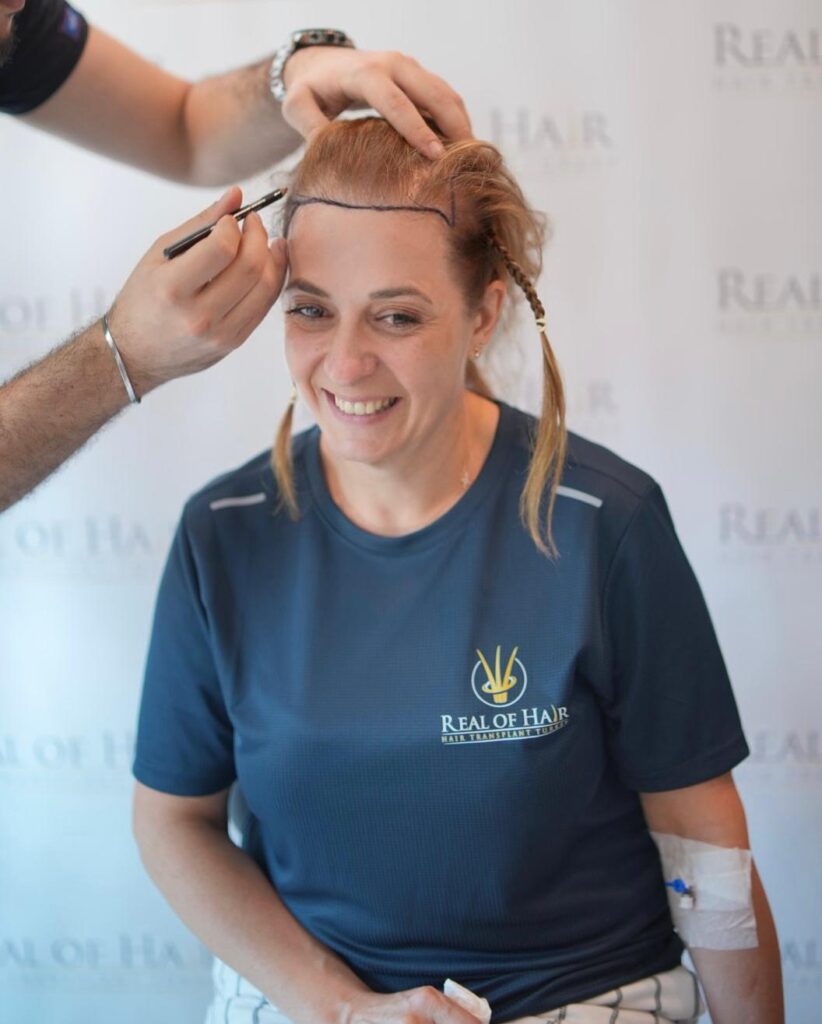
Design and Planning: The hairline is designed based on facial structure for natural results.
-
Procedure Day: The selected technique is applied under local anesthesia.
-
Recovery: Minimal downtime. Most patients resume daily life within a few days.
Post-Transplant Timeline
-
First 3 days: Mild sensitivity and scabbing
-
1st week: Scabs fall off, redness subsides
-
1-2 months: Temporary “shock loss” may occur (normal phase)
-
3-6 months: New hair begins to grow
-
6-12 months: Full results with improved density and volume
Who is a Good Candidate for Female Hair Transplant?
Women who meet the following conditions are typically suitable for hair transplantation:
-
Localized or patterned hair loss
-
Sufficient donor hair density (usually at the back of the head)
-
No active scalp disease
-
Not currently pregnant or nursing
-
Realistic expectations regarding outcome
Female Hair Transplant Cost
Hair transplant costs for women vary depending on:
-
The number of grafts required
-
The technique used (FUE, DHI, etc.)
-
Clinic expertise and country of treatment
A personalized quote is provided after a medical assessment.
Why Choose Us?
-
Expertise in female-specific hair restoration
-
Unshaven techniques for discreet treatment
-
Experienced surgeons and medical team
-
Natural-looking hairline design
-
Comprehensive follow-up and support
Frequently Asked Questions
Is the procedure painful?
No. It is performed under local anesthesia and is generally painless.
Will my head be shaved?
Not necessarily. We offer unshaven methods specifically designed for women.
When will I see the results?
New hair starts to grow around the 3rd month, with final results visible after 12 months.
